


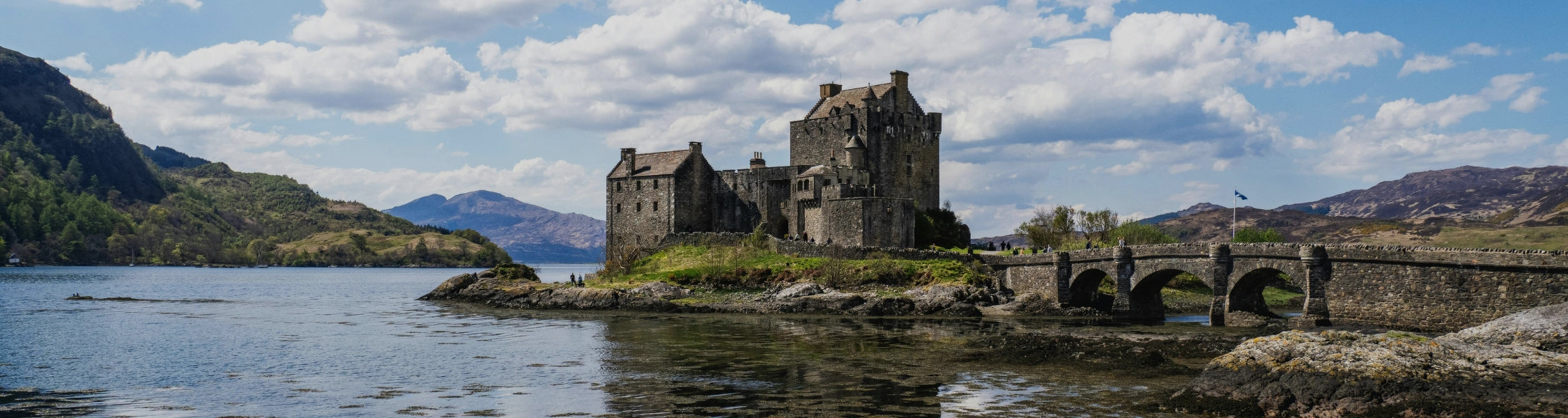
The Auchinleck clan traces its origins to the Barony of Auchinleck in Ayrshire, where the family was firmly established by the 13th century as feudal landholders under the Scottish Crown. Early charters record Auchinlecks witnessing royal grants and serving as loyal vassals of the Stewarts. The family's stronghold near the River Lugar became the seat of generations of Auchinleck lairds who shaped local Ayrshire governance. By the late medieval period, the clan had branched into Angus, where the variant 'Affleck' took root near Monikie, establishing the iconic Affleck Castle. The Auchinlecks of that Ilk stood as proud Lowland gentry, balancing Highland clan loyalties with Lowland legal customs, and contributing knights to Scotland's wars of independence.
Auchinleck Tartans & Clan
The Auchinleck clan tartan honors an ancient Ayrshire family whose roots reach deep into Scotland's Lowland soil, carrying centuries of legacy through Highland traditions, literary fame, and global descendants across America, Canada, and the United Kingdom.
Pretio Prudentia
 Who Wears Auchinleck Tartan?
Worn by Auchinleck descendants worldwide, Affleck and Auchencloss sept bearers, Boswell family connections, Ayrshire heritage enthusiasts, and Scottish-Americans, Canadians, and Britons honoring Lowland ancestry.
Associated Names
Associated Regiments
Auchinleck and Affleck kinsmen served in Ayrshire militias, Highland regiments, and British Army units, with descendants distinguished in Indian campaigns, both World Wars, and Commonwealth forces across Canada and beyond.
Shop Auchinleck Tartan Products
Discover authentic Auchinleck clan products including traditional kilts, Highland dress accessories, Affleck sept badges, tartan scarves, neckties, and ceremonial regalia crafted for descendants across America, Canada, and Britain.
- All Categories
- Accessoires pour vêtements traditionnels
- Bandanas pour animaux de compagnie
- Bandeaux
- Barrettes, pinces et épingles à cheveux
- Bas de Noël
- Bas de pantalon
- Bas pour bébés et tout-petits
- Besaces
- Bodies bébés
- Bonnets
- Bottes
- Boucles de ceinture
- Boucles d’oreilles
- Boutons de manchette
- Breloques et pendentifs
- Bretelles
- Broches et épinglettes
- Cartables
- Casquettes de baseball
- Casquettes plates
- Chapeaux
- Chapeaux de cowboy
- Chapeaux d’hiver
- Chaussures
- Chemins de table
- Chemises
- Colliers et cravates pour animaux de compagnie
- Colliers standards
- Cordons
- Costumes et tailleurs
- Coussins et porte-alliances
- Couvertures
- Cravates
- Drapeaux et manches à air
- Décorations
- Décorations de Noël
- Ensembles pour bébés et enfants
- Ensembles pour bébés et tout-petits
- Foulards
- Fournitures de mariage
- Gilets et vestes sans manches
- Grande cornemuse des Highlands
- Hauts de vêtements
- Housses de coussin pour chaises et canapés
- Jarretelles
- Jupes
- Lits pour animaux de compagnie
- Manteaux bouffants
- Manteaux et vestes
- Masques faciaux de mode
- Nappes
- Pochettes de costume
- Porte-monnaies
- Robes
- Rubans et galons
- Sacs fourre-tout
- Sacs pour cadeaux
- Sacs à bandoulière
- Sacs à dos
- Sacs à main
- Serviettes en tissu
- Shorts
- Tabliers
- Tapis de sapin de Noël
- Vestes boléro
- Vestes universitaires
- Vêtements traditionnels et de cérémonie
- Écharpes
- Écharpes, foulards et châles
- All Styles
- 16 oz
- 3 Piece
- 5 Yards - Casual
- 8 Yards - Traditional
- 9 Yards - Traditional
- A Line
- All Round Pleated
- Argyll
- Bias Cut
- Bow
- Dinner
- Double Breasted
- Dresses
- Golf
- Great Kilt
- Horseshoe Neck
- Infinity Scarf
- Kate Coat
- Kilt Shoes
- Mini
- Narrow Heel
- Pencil
- Pet Accessories
- Prince Charlie
- Quilted
- Ring
- Rosette
- Shirt
- Single Breasted
- Sleeveless
- Slim Cut
- Straight Cut Bottom
- Striped
- Tie
- Wrap
- All Products
- Accessoires pour cheveux
- Accessoires tartan
- Bandeau
- Bowties
- Braces
- Broche tartan
- Ceintures en cuir tartan
- Chapeaux et casquettes en tartan
- Chemises kilt
- Coats & Jackets
- Costume
- Court
- Cravates en tartan
- Dog Rug
- Embrayages
- Fly Plaid & Broches
- Ghillie Brogues
- Grand Kilt - Tous Tartans
- H-Bar Set
- Instruments de musique
- Kilt 9 Yards - Tous les tartans
- Kilt Flashes
- Kilt Flashs
- Kilt de 5 mètres - Tous les tartans
- Kilt végétalien - Tous les tartans
- Kilted/Plissé
- Kilts en cuir
- Kilts en jean
- Kilts féminins
- Kilts hybrides
- Lanyards
- Neckwear
- Pantalon tartan
- Pince à cheveux
- Plaid Fly
- Ring Cushion
- Robes tartan
- Romper Suit
- Ruban tartan
- Sacs à bandoulière
- Sacs à main
- Serape
- Sporrans
- Stoles
- Tabliers en tartan
- Tartan Beret
- Tartan Capes
- Tartan Decoration
- Tartan Dresses
- Tartan Knickerbockers
- Tartan Pants
- Tartan Poncho
- Tartan Ribbon
- Tartan Scarf
- Tartan Shawl
- Tartan Skirts
- Tartan Ties
- Tartan/Cargo
- Tenue kilt
- Trew
- Vestes
- Vestes et gilets kilt
- Vêtements pour chiens
- Waistcoat
- Wedding Garters
- Women Shoes
- kilt pour enfants
- masque
- Écharpe en tartan
- Écharpe tartan
- All Prices
- Under $50
- $50 - $100
- $100 - $200
- $200 - $500
- $500+
Associated Tartans
Your Selected Tartan
Other Associated Tartans
Auchinleck Tartans
0 Variations
Ancient Tartan
Before 1860, all fabric dyes came from nature — plants, berries, bark, and insects. The colours they produced were softer and more muted than what we're used to today: think mossy greens, dusty sky blues, and reds with a warm, orangey tone. A lot of people actually prefer Ancient tartans for this reason — the gentler contrasts let the pattern breathe and stand out in a way that bolder colours sometimes don't. Worth knowing: the pattern itself, called the sett, is exactly the same across all variations of a tartan. It's only the colours that change.
Modern Tartan
Modern tartans came about after 1860, when chemical dyes replaced natural ones. The difference is pretty striking. Those soft, earthy greens became deep bottle green. Pale blues turned into rich navy. Reds went from warm and muted to full-on scarlet. If you're after something bold and vivid, Modern is usually the one to go for. It's the version most people picture when they think of a classic tartan.
Weathered Tartan
Weathered tartans take their inspiration from what happens to fabric left out in the elements — faded by sun, softened by rain, worn in by time. The colours shift towards olive greens, warm browns, and very pale blues, with reds that fade down to something close to a dusty pink. It's a more rustic, lived-in look, and honestly a really beautiful one. If you want something that feels a little more understated and natural, Weathered is worth a look.
Hunting Tartan
Hunting tartans are essentially the camouflage version of a clan's tartan — greens and browns brought forward so the wearer could move through the landscape without standing out. Not every clan has one, and that's by design. If a tartan is already mostly green or brown (like the Black Watch or Gunn), there's no need to adapt it. But a tartan like the Fraser, which is predominantly red, would make someone very easy to spot in the field — so a Hunting version makes a lot of sense for clans like that.
Dress Tartan
Dress tartans were made for the big occasions — Highland games, celebrations, and traditional dance. The pattern stays the same, but the main colour is swapped out for white, or extra white is woven in to give it a lighter, more formal feel. As you'd expect from the Scots, the rules get bent every now and then — yellow has been used instead of white in some cases, which is exactly how the famously bold MacLeod Dress Modern and Barclay Dress Modern came to be.

The Auchinleck Story
Four centuries of history woven into every thread


Through the 15th and 16th centuries, the Auchinleck family consolidated influence in Ayrshire through marriage alliances with the Boyds, Cunninghams, and Wallaces. The original Auchinleck line eventually passed by marriage to the Boswell family in 1504, when Thomas Boswell received the Auchinleck estate from King James IV. The Boswells of Auchinleck thereafter carried the territorial designation while the Affleck branch flourished independently in Angus. Religious upheavals of the Reformation tested the clan, with many Auchinlecks embracing Presbyterian convictions and supporting the Covenanters during the 17th century. Auchinleck kinsmen fought at Pentland Hills and Bothwell Bridge, suffering for their faith while preserving family lands through turbulent decades of Scottish religious conflict.
Where does the name Auchinleck come from?
Auchinleck derives from the Gaelic 'Achadh nan Leac,' meaning 'field of the flat stones,' referencing the ancestral lands in Ayrshire, southwest Scotland. The family took its name from the Barony of Auchinleck, granted in the 13th century. Over generations the name evolved into Affleck in northern variants and Auchincloss in others, spreading through Scotland, Ulster, and onward to America and Canada. The surname reflects Scotland's Gaelic-Lowland fusion and the territorial naming traditions of medieval Scottish baronies.
The 18th century brought literary immortality to the Auchinleck name through James Boswell of Auchinleck, biographer of Samuel Johnson, whose 'Life of Johnson' became one of English literature's greatest works. The Auchinleck estate hosted Johnson's famous 1773 visit, immortalized in Boswell's writings and cementing the family's place in cultural history. During this era, Affleck and Auchincloss kinsmen emigrated to the American colonies, with Auchinclosses settling in New York and forming one of America's prominent old families. Other Aufleck and Affleck descendants pioneered communities in Nova Scotia, Pennsylvania, and the Carolinas. Auchinleck soldiers served in Highland regiments through the Seven Years' War and American Revolution, carrying Ayrshire valor across the Atlantic frontier.

The 19th and 20th centuries crowned Auchinleck military distinction through Field Marshal Sir Claude Auchinleck, 'The Auk,' Commander-in-Chief India and architect of North African defenses during World War II. His leadership at the First Battle of El Alamein halted Rommel's advance and reshaped Allied fortunes. Auchincloss descendants in America rose to prominence in finance, law, and letters, including novelist Louis Auchincloss, chronicler of New York society. Affleck families spread throughout Canada, settling in Ontario, Nova Scotia, and the Prairies, while others reached Australia and New Zealand. Across the Empire and Commonwealth, Auchinleck kinsmen served as officers, ministers, scholars, and civic leaders, carrying Ayrshire heritage into the modern global age.

The Auchinleck tartan weaves together Ayrshire heritage, Boswell literary legacy, and Lowland pride worn by descendants across Scotland, America, and Canada.
Craftsmanship defined by tradition, designed for the modern era.

