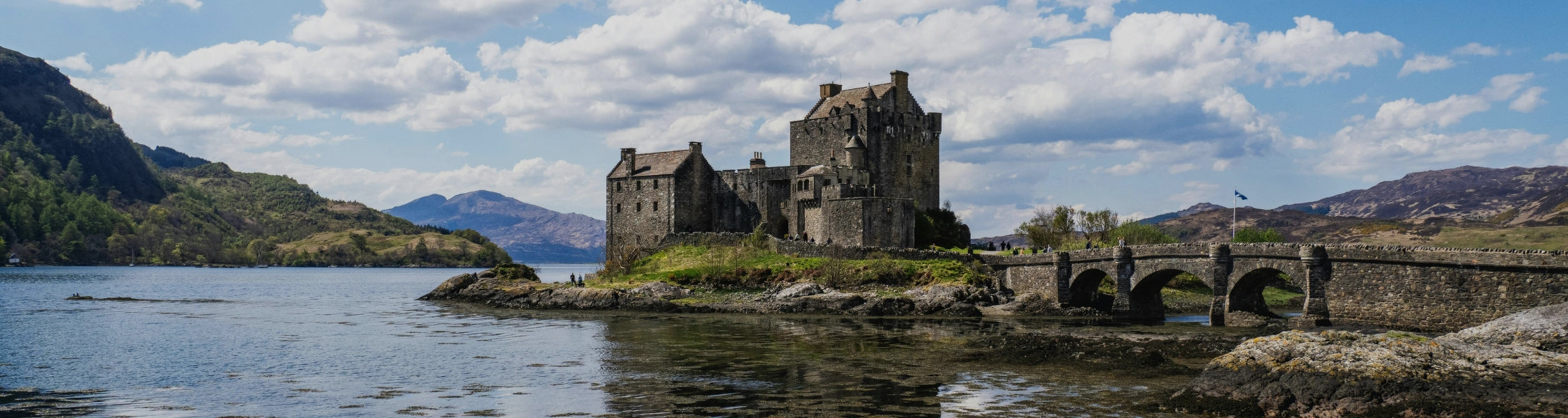
The Callaghan clan tartan represents one of Ireland's most ancient Gaelic families, tracing their lineage to the High Kings of Munster. With roots in County Cork and Clare, Callaghans established themselves as prominent chieftains before spreading across Scotland and North America through centuries of migration.
Clan Motto
Ceart láidir abú (Right and strong forever)
Heritage & Identity
Who Wears Callaghan Tartan?
Worn by Callaghan descendants worldwide, O'Callaghan families, Callahan and Gallagher sept members, Irish Guards veterans, and Celtic heritage enthusiasts throughout Ireland, Scotland, America, and Canada.
Associated Names
O'Callaghan
Callahan
Calahan
Callihan
Gallagher
O'Gallchobhair
Gallacher
MacCallaghan
O'Ceallacháin
Kelleher
Kellacher
MacKellaher
Callagher
Gallaher
O'Gallagher
MacGallagher
Callihan
Callehan
Shop Callaghan Tartan Products
Discover authentic Callaghan clan products including traditional Irish kilts, Highland dress accessories, clan crests, tartan sashes, Celtic jewelry, and ceremonial items crafted for descendants across Ireland, America, and Canada.
All Categories
Accessoires pour vêtements traditionnels
Bandanas pour animaux de compagnie
Bandeaux
Barrettes, pinces et épingles à cheveux
Bas de Noël
Bas de pantalon
Bas pour bébés et tout-petits
Besaces
Bodies bébés
Bonnets
Bottes
Boucles de ceinture
Boucles d’oreilles
Boutons de manchette
Breloques et pendentifs
Bretelles
Broches et épinglettes
Cartables
Casquettes de baseball
Casquettes plates
Chapeaux
Chapeaux de cowboy
Chapeaux d’hiver
Chaussures
Chemins de table
Chemises
Colliers et cravates pour animaux de compagnie
Colliers standards
Cordons
Costumes et tailleurs
Coussins et porte-alliances
Couvertures
Cravates
Drapeaux et manches à air
Décorations
Décorations de Noël
Ensembles pour bébés et enfants
Ensembles pour bébés et tout-petits
Foulards
Fournitures de mariage
Gilets et vestes sans manches
Grande cornemuse des Highlands
Hauts de vêtements
Housses de coussin pour chaises et canapés
Jarretelles
Jupes
Lits pour animaux de compagnie
Manteaux bouffants
Manteaux et vestes
Masques faciaux de mode
Nappes
Pochettes de costume
Porte-monnaies
Robes
Rubans et galons
Sacs fourre-tout
Sacs pour cadeaux
Sacs à bandoulière
Sacs à dos
Sacs à main
Serviettes en tissu
Shorts
Tabliers
Tapis de sapin de Noël
Vestes boléro
Vestes universitaires
Vêtements traditionnels et de cérémonie
Écharpes
Écharpes, foulards et châles
All Styles
16 oz
3 Piece
5 Yards - Casual
8 Yards - Traditional
9 Yards - Traditional
A Line
All Round Pleated
Argyll
Bias Cut
Bow
Dinner
Double Breasted
Dresses
Golf
Great Kilt
Horseshoe Neck
Infinity Scarf
Kate Coat
Kilt Shoes
Mini
Narrow Heel
Pencil
Pet Accessories
Prince Charlie
Quilted
Ring
Rosette
Shirt
Single Breasted
Sleeveless
Slim Cut
Straight Cut Bottom
Striped
Tie
Wrap
All Products
Accessoires pour cheveux
Accessoires tartan
Bandeau
Bowties
Braces
Broche tartan
Ceintures en cuir tartan
Chapeaux et casquettes en tartan
Chemises kilt
Coats & Jackets
Costume
Court
Cravates en tartan
Dog Rug
Embrayages
Fly Plaid & Broches
Ghillie Brogues
Grand Kilt - Tous Tartans
H-Bar Set
Instruments de musique
Kilt 9 Yards - Tous les tartans
Kilt Flashes
Kilt Flashs
Kilt de 5 mètres - Tous les tartans
Kilt végétalien - Tous les tartans
Kilted/Plissé
Kilts en cuir
Kilts en jean
Kilts féminins
Kilts hybrides
Lanyards
Neckwear
Pantalon tartan
Pince à cheveux
Plaid Fly
Ring Cushion
Robes tartan
Romper Suit
Ruban tartan
Sacs à bandoulière
Sacs à main
Serape
Sporrans
Stoles
Tabliers en tartan
Tartan Beret
Tartan Capes
Tartan Decoration
Tartan Dresses
Tartan Knickerbockers
Tartan Pants
Tartan Poncho
Tartan Ribbon
Tartan Scarf
Tartan Shawl
Tartan Skirts
Tartan Ties
Tartan/Cargo
Tenue kilt
Trew
Vestes
Vestes et gilets kilt
Vêtements pour chiens
Waistcoat
Wedding Garters
Women Shoes
kilt pour enfants
masque
Écharpe en tartan
Écharpe tartan
All Prices
Under $50
$50 - $100
$100 - $200
$200 - $500
$500+
Associated Tartans
Your Selected Tartan
Other Associated Tartans
Callaghan Tartans
0 Variations
Each tartan can feature several variations, with the most common being Ancient, Modern, Weathered, Hunting and Dress.
Loading tartans…
Ancient Tartan
Before 1860, all fabric dyes came from nature — plants, berries, bark, and insects. The colours they produced were softer and more muted than what we're used to today: think mossy greens, dusty sky blues, and reds with a warm, orangey tone. A lot of people actually prefer Ancient tartans for this reason — the gentler contrasts let the pattern breathe and stand out in a way that bolder colours sometimes don't. Worth knowing: the pattern itself, called the sett, is exactly the same across all variations of a tartan. It's only the colours that change.
Modern Tartan
Modern tartans came about after 1860, when chemical dyes replaced natural ones. The difference is pretty striking. Those soft, earthy greens became deep bottle green. Pale blues turned into rich navy. Reds went from warm and muted to full-on scarlet. If you're after something bold and vivid, Modern is usually the one to go for. It's the version most people picture when they think of a classic tartan.
Weathered Tartan
Weathered tartans take their inspiration from what happens to fabric left out in the elements — faded by sun, softened by rain, worn in by time. The colours shift towards olive greens, warm browns, and very pale blues, with reds that fade down to something close to a dusty pink. It's a more rustic, lived-in look, and honestly a really beautiful one. If you want something that feels a little more understated and natural, Weathered is worth a look.
Hunting Tartan
Hunting tartans are essentially the camouflage version of a clan's tartan — greens and browns brought forward so the wearer could move through the landscape without standing out. Not every clan has one, and that's by design. If a tartan is already mostly green or brown (like the Black Watch or Gunn), there's no need to adapt it. But a tartan like the Fraser, which is predominantly red, would make someone very easy to spot in the field — so a Hunting version makes a lot of sense for clans like that.
Dress Tartan
Dress tartans were made for the big occasions — Highland games, celebrations, and traditional dance. The pattern stays the same, but the main colour is swapped out for white, or extra white is woven in to give it a lighter, more formal feel. As you'd expect from the Scots, the rules get bent every now and then — yellow has been used instead of white in some cases, which is exactly how the famously bold MacLeod Dress Modern and Barclay Dress Modern came to be.
The Callaghan Story
Four centuries of history woven into every thread
Royal Origins
The Callaghan clan traces its royal origins to Ceallachán of Cashel, King of Munster from 935-954 AD, who successfully resisted Viking invasions and unified southern Ireland under Gaelic rule. His descendants, the Ó Ceallacháin, established themselves as one of the most powerful dynasties in medieval Ireland, controlling vast territories across County Cork, Clare, and Tipperary. The clan's seat at Cloughleagh Castle in Cork became the center of their authority. Early Callaghans served as hereditary chiefs, maintaining their Gaelic traditions and Brehon law while defending their lands against Norse raiders and rival Irish kingdoms.
Feudal Resistance
During the Anglo-Norman invasion of 1169-1171, the O'Callaghans faced significant challenges as English settlers seized Gaelic territories. Despite pressure, the clan maintained control of substantial lands in Munster, adapting to feudal systems while preserving their Irish identity. The family produced notable ecclesiastical leaders, including bishops and abbots who defended Irish Christianity against English reforms. In the 14th century, clan members established cadet branches throughout Ireland, with some migrating to Scotland's western Highlands and Islands. The Callaghans distinguished themselves as fierce defenders of Gaelic culture, supporting bardic schools and preserving ancient Irish laws and customs against English colonization efforts.
Where does the name Callaghan come from?
Callaghan derives from Irish Gaelic 'Ó Ceallacháin' meaning 'descendant of Ceallachán,' referring to Ceallachán of Cashel, the 10th-century King of Munster. The name originates from 'ceallach' meaning 'bright-headed' or 'church-going.' The O'Callaghans ruled as Kings of Munster from their stronghold at Cashel, County Tipperary, establishing one of Ireland's most powerful Gaelic dynasties before Norman invasions.
Persecution & Exile
The 16th and 17th centuries brought religious persecution and land confiscations during English Protestant rule. Many Callaghans lost ancestral territories during the Plantation of Munster but continued resistance through the Confederate Wars of 1641-1653. Clan members served as officers in Irish Catholic armies fighting English rule, with several achieving prominence in European military service after fleeing Ireland. Following the defeat at the Battle of the Boyne in 1690, numerous O'Callaghans joined the Flight of the Wild Geese, serving with distinction in French, Spanish, and Austrian armies. Those remaining in Ireland faced severe Penal Laws restricting Catholic landholding and political participation throughout the 18th century.
Great Famine Migration
The 19th century witnessed massive Callaghan emigration during the Great Famine of 1845-1852, with thousands settling in America, Canada, and Australia. Clan members established thriving communities in Boston, New York, and Chicago, while others pioneered settlements across the Canadian Maritimes and western frontiers. Many Callaghans served with valor during the American Civil War in both Union and Confederate forces. In Ireland, family members participated in the struggle for independence, supporting Daniel O'Connell's Catholic Emancipation movement and later joining the Irish Republican Brotherhood. The clan produced notable politicians, clergy, and business leaders who maintained strong connections to their Irish heritage while building new lives overseas.
The Callaghan tartan honors Ireland's ancient kings and Highland warriors, weaving together Gaelic heritage from Munster's royal courts to Scotland's Highland glens.
Featured Collections
Craftsmanship defined by tradition, designed for the modern era.