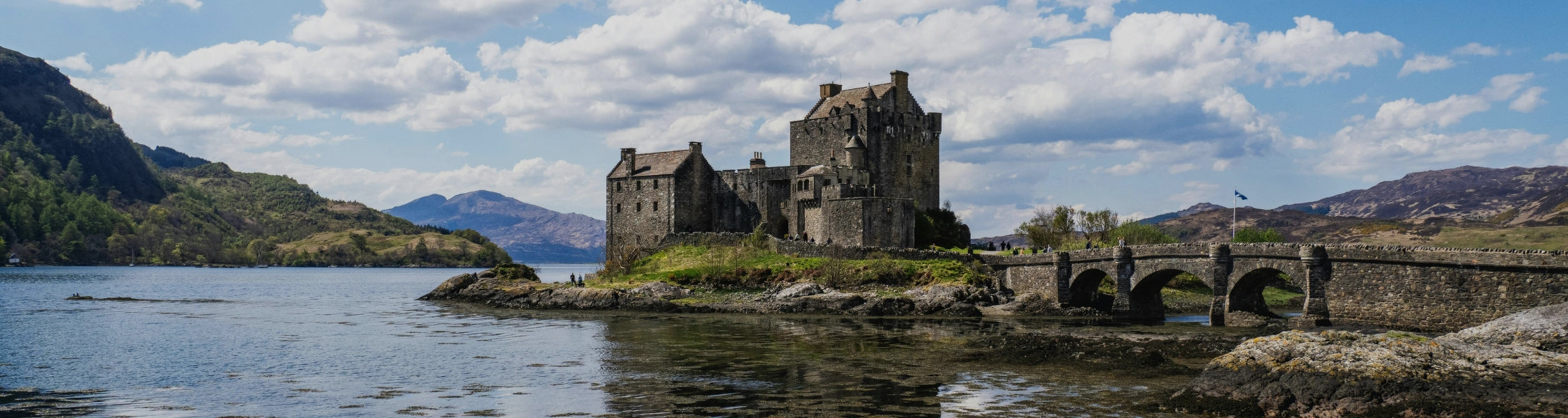
The MacGregor clan tartan represents Scotland's most storied Highland family, the 'Children of the Mist,' whose ancient lineage claims descent from Griogar, son of King Alpin. Despite centuries of proscription and persecution, MacGregors maintained their proud heritage.
Heritage & Identity
Who Wears MacGregor Tartan?
Worn by MacGregor descendants worldwide, sept families including Gregor, Grierson, MacAdam, and dozens of associated names, Highland regiment veterans, and Scottish heritage enthusiasts across America.
Associated Names
MacGregor
Gregor
Grierson
MacAdam
MacNish
MacNee
MacPeter
MacAlpine
Rusk
Leckie
Stirling
White
Black
Crowther
Fletcher
King
Peter
Gregorson
Grier
MacGruther
Neish
Dochart
Caird
MacInnes of Glenstrae
Macandeior
MacEoin Dhuibh
Military Heritage
Associated Regiments
MacGregors served with legendary courage in Highland regiments, Canadian militia units, and American Revolutionary forces, earning distinction from Culloden to modern peacekeeping missions worldwide.
42nd Royal Highland Regiment (Black Watch)
79th Queen's Own Cameron Highlanders
93rd Sutherland Highlanders
Argyll and Sutherland Highlanders
Royal Regiment of Canada (Canada)
Queen's Own Rifles of Canada (Canada)
Nova Scotia Highlanders (Canada)
Shop MacGregor Tartan Products
Discover authentic MacGregor clan products including traditional Highland kilts, clan badges featuring the crowned lion head, tartan accessories, ceremonial dirks, and heritage items for descendants.
All Categories
Accessoires de déguisement
Accessoires d’habillement
Accessoires pour cheveux
Accessoires pour chiens
Accessoires pour drapeaux et manches à air
Accessoires pour vêtements traditionnels
Bandeaux
Barrettes, pinces et épingles à cheveux
Bas de Noël
Bas de pantalon
Bas pour bébés et tout-petits
Boucles d’oreilles
Boutons de manchette
Bretelles
Broches et épinglettes
Butoirs de porte
Capes
Casquettes
Ceintures
Chapeaux
Chapeaux de cowboy
Chapeaux d’hiver
Chemins de table
Chemises
Colliers
Cordons
Cornemuses
Costumes et tailleurs à pantalon
Coussins pour fauteuils et canapés
Couvertures
Cravates
Décorations de Noël
Déguisements
Ensembles pour bébés et tout-petits
Fleurs et plantes artificielles
Foulards
Gilets et vestes sans manches
Hauts de vêtements
Jupes
Manteaux et vestes
Masques
Nappes
Non classé
Pantalons
Pantalons de sport
Pendentifs
Pinces
Pochettes de costume
Polos
Ponchos
Porte-jarretelles
Portefeuilles
Robes
Rubans et galons
Sacs fourre-tout
Sacs pour cadeaux
Sacs à dos
Sacs à main
Serviettes en tissu
Shorts en jean
Sweat-shirts
Sweats à capuche
T-shirts
Tabliers
Tapis de sapin de Noël
Tissu
Vestes
Vestes bomber
Vêtements traditionnels et de cérémonie
Écharpes, foulards et châles
Équerres de traçage et de charpentier
All Styles
All Products
Bow Tie
Braces
Clutches
Cross Body Bags
Cushion
Dog Apparel
Female Kilts
Fly Plaid & Brooches
Garter
Glengarry & Balmoral Hats
Golf Trouser
H-Bar Set
Hair Clip
Hair accessories
Handbags
Headband
Jackets
Kilt Flashes
Kilt Shirts
Kilted/Pleated
Kilts tartan - En stock
Lanyards
Long/Maxi
Midi
Mini
Musical instruments
Neckwear
Serape
Shirt
Short
Shoulder Bags
Sporrans
Stole
Suit
Tails / Morning Coat
Tartan Aprons
Tartan Brooch
Tartan Dresses
Tartan Hats & Caps
Tartan Knickerbockers
Tartan Leather Belts
Tartan Pants
Tartan Poncho
Tartan Ribbon
Tartan Sash
Tartan Scarf
Tartan Shawl
Tartan Ties
Tartan accessories
Tartan/Cargo
Trew
Waistcoat
Wallets, Pouches & Purses
Women Tartan Shorts
cape
kids kilt
mask
All Prices
Under $50
$50 - $100
$100 - $200
$200 - $500
$500+
Associated Tartans
Your Selected Tartan
Other Associated Tartans
MacGregor Tartans
0 Variations
Each tartan can feature several variations, with the most common being Ancient, Modern, Weathered, Hunting and Dress.
Loading tartans…
Ancient Tartan
Before 1860, all fabric dyes came from nature — plants, berries, bark, and insects. The colours they produced were softer and more muted than what we're used to today: think mossy greens, dusty sky blues, and reds with a warm, orangey tone. A lot of people actually prefer Ancient tartans for this reason — the gentler contrasts let the pattern breathe and stand out in a way that bolder colours sometimes don't. Worth knowing: the pattern itself, called the sett, is exactly the same across all variations of a tartan. It's only the colours that change.
Modern Tartan
Modern tartans came about after 1860, when chemical dyes replaced natural ones. The difference is pretty striking. Those soft, earthy greens became deep bottle green. Pale blues turned into rich navy. Reds went from warm and muted to full-on scarlet. If you're after something bold and vivid, Modern is usually the one to go for. It's the version most people picture when they think of a classic tartan.
Weathered Tartan
Weathered tartans take their inspiration from what happens to fabric left out in the elements — faded by sun, softened by rain, worn in by time. The colours shift towards olive greens, warm browns, and very pale blues, with reds that fade down to something close to a dusty pink. It's a more rustic, lived-in look, and honestly a really beautiful one. If you want something that feels a little more understated and natural, Weathered is worth a look.
Hunting Tartan
Hunting tartans are essentially the camouflage version of a clan's tartan — greens and browns brought forward so the wearer could move through the landscape without standing out. Not every clan has one, and that's by design. If a tartan is already mostly green or brown (like the Black Watch or Gunn), there's no need to adapt it. But a tartan like the Fraser, which is predominantly red, would make someone very easy to spot in the field — so a Hunting version makes a lot of sense for clans like that.
Dress Tartan
Dress tartans were made for the big occasions — Highland games, celebrations, and traditional dance. The pattern stays the same, but the main colour is swapped out for white, or extra white is woven in to give it a lighter, more formal feel. As you'd expect from the Scots, the rules get bent every now and then — yellow has been used instead of white in some cases, which is exactly how the famously bold MacLeod Dress Modern and Barclay Dress Modern came to be.
The MacGregor Story
Four centuries of history woven into every thread
Royal Origins
The MacGregor clan traces its ancient lineage to Griogar, son of King Alpin of Dalriada, establishing themselves as one of Scotland's oldest royal bloodlines in the 8th century. Their ancestral lands centered on Glenstrae in Argyllshire, where they ruled as chiefs of Clan Alpine for over 400 years. The MacGregors' motto 'S Rioghal mo dhream' - Royal is my race - reflects their proud descent from Scottish royalty. Early clan history shows MacGregors as fierce defenders of their Highland territories against encroaching Campbell and Colquhoun forces, earning their legendary reputation as the 'Children of the Mist' through guerrilla warfare tactics that would define their resistance for centuries.
Persecution & Resistance
The 16th century brought catastrophic persecution to Clan MacGregor following the Battle of Glen Fruin in 1603, where MacGregors defeated the Colquhouns in a bloody Highland feud. King James VI declared the entire clan outlawed, banning the MacGregor name under pain of death in 1603. This unprecedented proscription forced clan members to adopt other surnames like Campbell, Murray, or Graham for survival. Despite royal persecution, MacGregors maintained their clan identity through secret gatherings and continued resistance. The famous Rob Roy MacGregor emerged during this period, becoming a folk hero whose exploits against government forces and rival clans captured Scottish imagination and later inspired Sir Walter Scott's romantic novels.
Where does the name MacGregor come from?
MacGregor derives from Gaelic 'Mac Griogair,' meaning 'son of Gregor' or 'son of the watchful one.' The name traces to Griogar, son of King Alpin of Dalriada in the 8th century, establishing one of Scotland's oldest clan lineages. Despite royal origins, MacGregors became known as 'Children of the Mist' for their guerrilla tactics in defending Glenstrae and surrounding glens from encroaching Lowland powers and rival clans throughout medieval Scotland.
Exile & Resilience
Throughout the 17th and early 18th centuries, MacGregors endured the harshest clan persecution in Highland history, with their name remaining proscribed for over 150 years. Many clan members emigrated to Ireland and later North America, establishing MacGregor communities in Nova Scotia, New York, and the Carolinas. Despite legal restrictions, MacGregors distinguished themselves in Jacobite uprisings, fighting at Sheriffmuir in 1715 and Culloden in 1746 under assumed names. The clan's resilience during this dark period demonstrated their unbreakable Highland spirit. Rob Roy's sons continued their father's legacy of resistance, while other MacGregors served with distinction in British forces abroad, gradually rebuilding clan reputation through military service.
Restoration & Revival
The MacGregor name was finally restored by King George III in 1774, ending 171 years of proscription and allowing clan members to reclaim their ancestral identity. General Sir Evan MacGregor led the clan's revival, while MacGregor emigrants thrived in North America, with descendants fighting in the American Revolution on both sides. The 19th century witnessed a MacGregor renaissance as clan members achieved prominence in military service, colonial administration, and business across the British Empire. Notable figures included Sir Gregor MacGregor, the controversial 'Prince of Poyais,' and numerous MacGregor officers in Highland regiments. Canadian MacGregors established thriving communities from Nova Scotia to British Columbia, maintaining clan traditions through Highland societies.
The MacGregor tartan embodies the spirit of 'S Rioghal mo dhream' - Royal is my race, worn by descendants of the Children of the Mist across Scotland, Canada, and America.
Featured Collections
Craftsmanship defined by tradition, designed for the modern era.