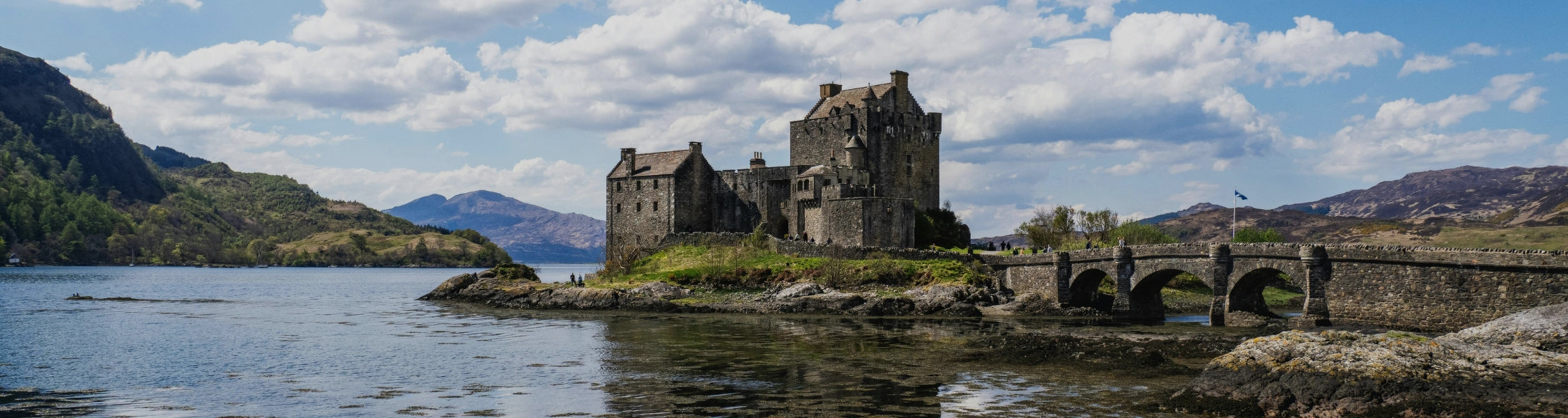
The Scott clan tartan represents one of Scotland's most powerful Border families, whose legendary legacy spans from medieval Buccleuch strongholds to global leadership across America, Canada, and Britain through centuries of valor.
Clan Motto
Amo (I Love)
Heritage & Identity
Who Wears Scott Tartan?
Worn by Scott descendants globally, sept families including Scot, Scots, and regional variants, Border regiment veterans, and Scottish heritage enthusiasts throughout America, Canada, and Britain.
Associated Names
Scot
Scots
Scotte
Schott
Skott
McScott
MacScott
Scott of Buccleuch
Scott of Balwearie
Scott of Harden
Scott of Thirlestane
Langscott
Rotscott
Military Heritage
Associated Regiments
Scott warriors distinguished themselves in Border Horse regiments, King's Own Scottish Borderers, Highland units, and elite British Army formations, excelling in European campaigns and North American frontier service.
King's Own Scottish Borderers (Scotland)
Border Horse (Scotland)
Royal Scots Dragoon Guards (Scotland)
Black Watch (Scotland)
Scots Guards (Britain)
Queen's Own Cameron Highlanders (Canada)
Toronto Scottish Regiment (Canada)
Shop Scott Tartan Products
Explore authentic Scott clan merchandise including traditional kilts, Highland dress accessories, clan badges, tartan ties, scarves, and ceremonial items crafted for descendants across North America and Scotland.
All Categories
Accessoires de déguisement
Accessoires d’habillement
Accessoires pour cheveux
Accessoires pour chiens
Accessoires pour drapeaux et manches à air
Accessoires pour vêtements traditionnels
Bandeaux
Barrettes, pinces et épingles à cheveux
Bas de Noël
Bas de pantalon
Bas pour bébés et tout-petits
Boucles d’oreilles
Boutons de manchette
Bretelles
Broches et épinglettes
Butoirs de porte
Capes
Casquettes
Ceintures
Chapeaux
Chapeaux de cowboy
Chapeaux d’hiver
Chemins de table
Chemises
Colliers
Cordons
Cornemuses
Costumes et tailleurs à pantalon
Coussins pour fauteuils et canapés
Couvertures
Cravates
Décorations de Noël
Déguisements
Ensembles pour bébés et tout-petits
Fleurs et plantes artificielles
Foulards
Gilets et vestes sans manches
Hauts de vêtements
Jupes
Manteaux et vestes
Masques
Nappes
Non classé
Pantalons
Pantalons de sport
Pendentifs
Pinces
Pochettes de costume
Polos
Ponchos
Porte-jarretelles
Portefeuilles
Robes
Rubans et galons
Sacs fourre-tout
Sacs pour cadeaux
Sacs à dos
Sacs à main
Serviettes en tissu
Shorts en jean
Sweat-shirts
Sweats à capuche
T-shirts
Tabliers
Tapis de sapin de Noël
Tissu
Vestes
Vestes bomber
Vêtements traditionnels et de cérémonie
Écharpes, foulards et châles
Équerres de traçage et de charpentier
All Styles
All Products
Bow Tie
Braces
Clutches
Cross Body Bags
Cushion
Dog Apparel
Female Kilts
Fly Plaid & Brooches
Garter
Glengarry & Balmoral Hats
Golf Trouser
H-Bar Set
Hair Clip
Hair accessories
Handbags
Headband
Jackets
Kilt Flashes
Kilt Shirts
Kilted/Pleated
Kilts tartan - En stock
Lanyards
Long/Maxi
Midi
Mini
Musical instruments
Neckwear
Serape
Shirt
Short
Shoulder Bags
Sporrans
Stole
Suit
Tails / Morning Coat
Tartan Aprons
Tartan Brooch
Tartan Dresses
Tartan Hats & Caps
Tartan Knickerbockers
Tartan Leather Belts
Tartan Pants
Tartan Poncho
Tartan Ribbon
Tartan Sash
Tartan Scarf
Tartan Shawl
Tartan Ties
Tartan accessories
Tartan/Cargo
Trew
Waistcoat
Wallets, Pouches & Purses
Women Tartan Shorts
cape
kids kilt
mask
All Prices
Under $50
$50 - $100
$100 - $200
$200 - $500
$500+
Associated Tartans
Your Selected Tartan
Other Associated Tartans
Scott Tartans
0 Variations
Each tartan can feature several variations, with the most common being Ancient, Modern, Weathered, Hunting and Dress.
Loading tartans…
Ancient Tartan
Before 1860, all fabric dyes came from nature — plants, berries, bark, and insects. The colours they produced were softer and more muted than what we're used to today: think mossy greens, dusty sky blues, and reds with a warm, orangey tone. A lot of people actually prefer Ancient tartans for this reason — the gentler contrasts let the pattern breathe and stand out in a way that bolder colours sometimes don't. Worth knowing: the pattern itself, called the sett, is exactly the same across all variations of a tartan. It's only the colours that change.
Modern Tartan
Modern tartans came about after 1860, when chemical dyes replaced natural ones. The difference is pretty striking. Those soft, earthy greens became deep bottle green. Pale blues turned into rich navy. Reds went from warm and muted to full-on scarlet. If you're after something bold and vivid, Modern is usually the one to go for. It's the version most people picture when they think of a classic tartan.
Weathered Tartan
Weathered tartans take their inspiration from what happens to fabric left out in the elements — faded by sun, softened by rain, worn in by time. The colours shift towards olive greens, warm browns, and very pale blues, with reds that fade down to something close to a dusty pink. It's a more rustic, lived-in look, and honestly a really beautiful one. If you want something that feels a little more understated and natural, Weathered is worth a look.
Hunting Tartan
Hunting tartans are essentially the camouflage version of a clan's tartan — greens and browns brought forward so the wearer could move through the landscape without standing out. Not every clan has one, and that's by design. If a tartan is already mostly green or brown (like the Black Watch or Gunn), there's no need to adapt it. But a tartan like the Fraser, which is predominantly red, would make someone very easy to spot in the field — so a Hunting version makes a lot of sense for clans like that.
Dress Tartan
Dress tartans were made for the big occasions — Highland games, celebrations, and traditional dance. The pattern stays the same, but the main colour is swapped out for white, or extra white is woven in to give it a lighter, more formal feel. As you'd expect from the Scots, the rules get bent every now and then — yellow has been used instead of white in some cases, which is exactly how the famously bold MacLeod Dress Modern and Barclay Dress Modern came to be.
The Scott Story
Four centuries of history woven into every thread
Early Power
The Scott clan emerged as a dominant force in the Scottish Borders during the 12th century, with early records showing Uchtred filius Scott holding lands in Roxburghshire around 1165. The family established their seat at Buccleuch in Selkirkshire, becoming hereditary sheriffs and wardens of the marches. These early Scotts served as guardians of Scotland's turbulent southern frontier, developing into one of the most formidable Border reiver families. Their strategic position allowed them to control vital border crossings and river valleys, accumulating wealth and influence through both legitimate governance and legendary cattle raids that became the stuff of Border ballad tradition.
Rise of Buccleuch
During the 14th and 15th centuries, the Scotts of Buccleuch consolidated their power through strategic marriages and military prowess. Sir Walter Scott of Buccleuch emerged as a key figure, expanding clan territories through marriage to the Kerr heiress and acquiring extensive lands in Teviotdale. The family weathered the Wars of Scottish Independence, generally supporting the Bruce cause while maintaining pragmatic relationships with English neighbors. Their castle at Newark became a symbol of Scott power, controlling the Yarrow Valley and serving as a base for their legendary raids into England. The clan developed a reputation for fierce loyalty to Scotland while operating with characteristic Border independence.
Where does the name Scott come from?
Scott derives from the Latin 'Scoti,' meaning 'Gaels' or 'Irish,' originally referring to Celtic peoples who migrated from Ireland to Scotland. The surname emerged in the Scottish Borders during the 12th century, identifying families of Gaelic origin who settled in the region. The name became synonymous with the powerful Border reiver families who dominated the Anglo-Scottish frontier for centuries.
Reiver Glory
The 16th century marked the golden age of Scott Border reiving, with clan members leading devastating raids across the Anglo-Scottish frontier. Walter Scott of Harden, known as 'Bold Buccleuch,' became legendary for his audacious rescue of Kinmont Willie Armstrong from Carlisle Castle in 1596, defying both English and Scottish authorities. The clan's military reputation earned them royal favor, with successive Scott chiefs appointed as Wardens of the West March. Their influence extended beyond raiding, as they patronized Border ballad culture and maintained extensive kinship networks throughout the region. The Scotts balanced their reiver activities with diplomatic service to the Scottish crown.
Literary Legacy
The 19th century transformed the Scott clan from Border warriors into cultural icons, primarily through Sir Walter Scott of Abbotsford, whose novels and poetry romanticized Highland and Border history for global audiences. His literary genius brought international fame to the Scott name while preserving Scottish traditions through works like 'The Lay of the Last Minstrel' and 'Ivanhoe.' Simultaneously, clan members emigrated to North America, establishing Scott communities in Canada and the United States. The family adapted to modern Scotland while maintaining their Border heritage, with successive Dukes of Buccleuch becoming major landowners and cultural patrons. The clan's literary legacy continues influencing Scottish identity worldwide.
The Scott tartan embodies Border reiver heritage and noble distinction, worn by descendants of Scotland's most celebrated literary and military dynasty worldwide.
Featured Collections
Craftsmanship defined by tradition, designed for the modern era.