



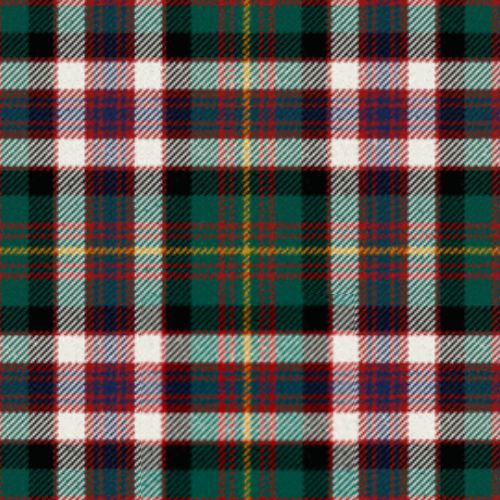


Clan

Carnegie

Carnegie
Angus Seat: Kinnaird Castle Chief: James Carnegie

Clan Carnegie held lands in Angus, with its historic seat at Kinnaird Castle. The line traces to Jocelyn de Balinhard, and the Carnegie tartan is worn today by members and descendants across the world.

Is your surname a sept? Try Bowie, Donaldson, MacBeth, Hutcheson, MacGillivary, Whannel, Reaoch, Hewison — and 5 more. See the full sept directory →

Things to know about Clan Carnegie

Gaelic name Carnegie
Motto Dred God
"Dread God"
Region Angus
Kinnaird, Angus, Southesk
Seat Kinnaird Castle
Seat of the Earls of Southesk
Current chief James Carnegie
Duke of Fife, Earl of Southesk, Chief of Clan Carnegie
Documented tartans 6 tartans · 0 septs
7 tartans · 1 clan family

The Carnegie tartans

Every documented tartan in our catalogue tied to this clan. Tap a card to view the variant in our configurator.

Carnegie Tartan swatch
Carnegie Tartan
View this tartan
Carnegie Of Skibo Tartan swatch
Carnegie Of Skibo Tartan
View this tartan
Carnegie Check Tartan swatch
Carnegie Check Tartan
View this tartan
Carnegie Dress Tartan swatch
Carnegie Dress Tartan
View this tartan
Carnegie Dress Dance Tartan swatch
Carnegie Dress Dance Tartan
View this tartan
Carnegie Dress Ancient Tartan swatch
Carnegie Dress Ancient Tartan
View this tartan
Carnegie Check Ancient Tartan swatch
Carnegie Check Ancient Tartan
View this tartan
The clan story

Clan Carnegie — Origins & History

Origins · The early Carnegie line

Clan Carnegie takes its place among the historic families of Angus. The line is traditionally traced to Jocelyn de Balinhard, and over the centuries the Carnegie chiefs built the territory, alliances and identity that the name still carries today.

Like all the great Scottish kindreds, Carnegie was bound together less by a single bloodline than by allegiance to its chief and its country. Members took the chief's surname, followed his banner in war, and wore his colours — the origin of the tartan tradition that survives in the Carnegie setts sold today.

“Dred God” — Dread God.

— the motto of Clan Carnegie

Through the Centuries

From its base in Angus, Clan Carnegie shared in the great movements of Scottish history — the wars of independence, the rise and fall of the Stewart kings, the Jacobite risings of the 18th century, and the upheavals that scattered Highland and Lowland families alike across the globe. The family seat at Kinnaird Castle remains a focus of Carnegie heritage.

The Dress Act of 1746 banned Highland dress for a generation, and the Clearances that followed drove many Scottish families overseas. Yet the Carnegie identity survived — carried in names, in records, and in the cloth. The clan is led today by its chief, James Carnegie, recognised by the Lord Lyon as head of the name.

Today the Carnegie tartan is worn at weddings, gatherings, Highland games and Burns Night celebrations from Scotland to North America, Australia and New Zealand — a living link between the modern family and its Scottish origins.
Across the Atlantic

Carnegie in America

Scots carrying the Carnegie name crossed the Atlantic in successive waves — as colonists, as Highland emigrants after the Clearances, and as part of the great 19th-century migration. Their descendants today form part of the millions of Americans who claim Scottish ancestry.

The Carnegie name in the New World

Scottish emigration to North America unfolded over three centuries. Early settlers came to the Carolinas, Virginia and Nova Scotia in the 1700s; later waves followed the Highland Clearances of the late 18th and 19th centuries, settling in Canada, the Appalachians, the Midwest and beyond. Families carrying the Carnegie name took part in this movement and helped build the communities they joined.

Today the United States is home to a large population of Scottish descent, and the Carnegie name endures among them. Scottish heritage is celebrated each year at more than two hundred Highland games across North America, where the Carnegie tartan can be seen alongside the setts of every other Scottish family.

April 6 is National Tartan Day in the United States — declared by the US Senate in 1998 and proclaimed by the President in 2008 — marking the anniversary of the 1320 Declaration of Arbroath and honouring the contribution of Scottish-Americans, including those who carry the Carnegie name.

Angus
Ancestral region of Clan Carnegie
200+
US Highland Games each year
April 6
National Tartan Day
Heritage centre
Scottish Tartans Museum

Franklin, North Carolina — the only museum of Scottish tartans in the United States, with setts from clans and families across Scotland on display.

Cultural milestone
National Tartan Day

Declared by US Senate Resolution in 1998 and signed into US Presidential Proclamation in 2008. April 6 each year — the anniversary of the 1320 Declaration of Arbroath.

Research
Trace your line

Our heritage team can help you research the Carnegie name and choose the right tartan for your family. Genealogical records, parish registers and emigration lists are the place to start.

Major US Highland Games with Clan Donald tents

Grandfather Mountain Games
Linville, NC · second weekend of July
Stone Mountain Highland Games
Stone Mountain, GA · mid-October
Pleasanton Scottish Games
Pleasanton, CA · Labor Day weekend
NYC Tartan Week
Manhattan · first week of April

Notable MacDonald Americans

1746
The Dress Act
Highland dress banned for a generation; the Carnegie tartan tradition survived the proscription.
1782
The ban repealed
Tartan returns to Scottish life and begins its journey into the wider world.
2008
US Tartan Day
Presidential proclamation honours Scottish-Americans, including those of the Carnegie name.
McDonald · Macdonald · M'Donald

All spellings, one clan

Spelling variants

Like most Scottish surnames, Carnegie has been written in several ways over the centuries. Spelling was rarely fixed before the 19th century — clerks, ministers and ship's pursers each recorded a name as they heard it, so variations appear even within a single family.

Whichever form appears on your birth certificate, marriage record or family Bible, it is the same Carnegie name, and you are entitled to wear the Carnegie tartan.

CarnegieMost common modern spelling
CarnegiHistoric variant
Frequently asked

Questions about Clan Carnegie

Answers to the questions we hear most often from customers and visitors researching their lineage.

Are the different spellings of Carnegie the same family?

Generally yes. Scottish surname spelling was not standardised until the 19th century, so Carnegie appears in several forms in old records. They normally refer to the same family and share the same tartan.

Can anyone wear the Carnegie tartan?

Yes. Tartan is freely worn today. The Carnegie tartan is most associated with those who carry the name or descend from the family, but anyone may buy and wear it for a wedding, a Highland event or everyday style.

Who is the chief of Clan Carnegie?

The chief is James Carnegie, Duke of Fife, Earl of Southesk, Chief of Clan Carnegie. The chief is recognised by the Lord Lyon King of Arms, Scotland's heraldic authority.

What is the Carnegie motto?

The motto is “Dred God” — Dread God. Mottoes appear on the clan crest and express the character the family chose to be known by.

Which Carnegie tartan should I choose?

The main Carnegie tartan is the usual default. Where Modern, Ancient, Weathered and Dress versions exist, they differ only in the depth of the colours, not the pattern — Modern is boldest, Ancient softer, Weathered muted, and Dress the brightest, most formal version. Choose whichever suits the occasion.

My surname is linked to Carnegie — can I wear the tartan?

Yes. If your name is a recognised sept or spelling variant of Carnegie, you are entitled to wear the Carnegie tartan. If you are unsure, our heritage team can help you check the connection.

How did the Carnegie name come to America?

Scots carrying the Carnegie name emigrated to North America from the 1700s onward — as colonists, as Highland emigrants after the Clearances, and during the 19th-century migration. Their descendants are among the millions of Americans of Scottish ancestry today.

Where can I research my Carnegie family history?

Start with Scottish parish registers, the National Records of Scotland, and emigration and census records for the country your family settled in. Clan societies and our own heritage team can help you connect your Carnegie line to its Scottish origins.